You've done the hard part — you've decided to build a fishing brand. But somewhere between browsing Alibaba at midnight and getting your third contradictory answer from a sourcing agent, a simple question turned into a maze: private label, fishing apparel OEM services, or fishing apparel ODM services?
Each option carries a different price tag, a different timeline, and a different ceiling for your brand's growth. The wrong call at the wrong stage doesn't just waste money. It can lock you into a supply chain that works against you.
This guide breaks it all down with real fishing industry numbers. You get a category-by-category breakdown — because what works for soft plastic baits is a different conversation from spinning reels. Plus, there's a clear decision framework you can put to work right away, whether you're starting with $5K and a dream or $50K and a SKU list ready to scale.
Private Label, OEM, and ODM: Core Differences in the Fishing Tackle Supply Chain
Three models. One supply chain. The outcomes are very different depending on which one you pick.
The distinction isn't just vocabulary. It's the difference between owning your product and renting someone else's. Here's how they separate in the fishing tackle world:
Private Label (PL) means the fishing apparel factory already built the product. You put your logo on it and sell it. That 6'6" medium spinning rod? Five other brands are selling the exact same blank with different decals. Your crankbait body casts the same as theirs. You own the brand, the packaging, the UPC — nothing else. Low barrier to entry. Low competitive moat.
ODM (Original Design Manufacturer) gives you room to work within someone else's platform. You can adjust a jerkbait's internal weight distribution, tweak a rod's taper from fast to moderate, or swap guide spacing for walleye jigging. The factory holds the core platform IP. You own the fishing apparel custom changes, the colorways, and sometimes a regional exclusivity clause. Think of it as co-development with set boundaries.
OEM (Original Equipment Manufacturer) is where full ownership starts. You provide the CAD files, the material specs, the composite layup schedule. The factory builds to your blueprint. By contract, they cannot sell that same design to any other brand. Your swimbait joint design, your reel frame geometry — it's yours and yours alone.
Private Label | ODM | OEM | |
|---|---|---|---|
Design IP Owner | Factory | Shared | You |
Product Exclusivity | None (by default) | Negotiable | Full |
Customization Depth | Logo + packaging | Functional tweaks | Complete |
MOQ Range | 100–500 pcs | 200–500 pcs | 300–1,000 pcs |
Barrier to Entry | Low | Medium | High |
Brand Defensibility | Low | Moderate | High |
One number worth paying attention to: OEM/ODM fishing suppliers have steadily lowered MOQs in recent years. Many now accept 100–300 pieces per SKU for rods and lures. That's a big shift from the old 500–1,000 piece floor. For small brands, the math changes quite a bit.
Each model has a built-in ceiling from day one. Private label competes on price and marketing. ODM competes on fit-for-purpose performance. OEM competes on technology and IP that no other brand can copy.
Upfront Costs, MOQ, and Lead Times: Real Industry Data Breakdown
Numbers don't lie, even when sourcing agents do.
Here's the data most fishing brand guides won't give you — actual cost ranges, broken down by model, with the hidden fees included.
Model | MOQ (per SKU) | Tooling / Setup | First Batch Cost | Unit Cost (Ex-works) | Total Upfront | Lead Time |
|---|---|---|---|---|---|---|
Private Label | 100–300 pcs | $0–$500 | $500–$6,000 | $3–$15 | $1,500–$8,000 | 4–8 weeks |
ODM | 200–1,000 pcs | $800–$3,000 | $1,600–$15,000 | $6–$35 | $3,000–$20,000 | 8–16 weeks |
OEM | 500–3,000+ pcs | $3,000–$60,000+ | $10,000–$80,000+ | $15–$70 | $20,000–$150,000+ | 6–12 months |
A few things this table doesn't show on its own:
Small-batch orders carry a real tax. Running fewer than 500 units adds a 20–40% per-unit premium over standard production runs. Fixed costs — factory setup, material minimums, machine time — spread across fewer pieces. You absorb all of it.
What's inside each cost stack:
Private Label: Your spend goes to packaging design, label artwork, and UPC registration. The factory mold already exists. Add freight and duties to get your true landed cost.
ODM: Budget for multiple sample rounds before production locks. Prototype revisions and minor tooling adjustments can add $100–$800+ per product . That hits before you've ordered a single sellable unit.
OEM: Design fees, tooling, test fixtures, compliance certification — all of this hits before production begins. It's a heavy fixed burden. You have zero units on the shelf to show for it.
The planning shortcut:
Budget under $8K → Private Label, tight SKU count, zero tooling exposure
Budget $8K–$20K → ODM, negotiate sampling fees upfront, limit revision rounds
Budget $20K+ → OEM is viable, but only if ODM genuinely can't replicate the product design
Lead time adds more pressure on top of cost. A private label fishing lure order ships in 4–8 weeks . An OEM spinning reel with custom frame geometry can sit in development for six months before the first sample arrives . Miss a seasonal buying window, and that tooling investment earns nothing until the following year.
Matching Manufacturing Models to Fishing Product Categories
Not every fishing product needs the same supply chain strategy. A soft plastic worm and a precision spinning reel come from completely different manufacturing worlds. Treating them the same way is one of the most expensive mistakes a new fishing brand can make.
Here's how the three models map across the categories you're most likely to source.
Soft Plastic Baits: Start Simple, Earn Your Way to Custom
Private label is where most new lure brands begin — and it's the right call. Existing molds for grubs, worms, and creature baits are easy to find. At 50–200 packs per color, you test colorways with real market feedback before locking in anything structural. Standard PVC bodies run $0.03–$0.08 per piece at scale. Put your logo on a header card and you're in the game.
ODM becomes an option once you know what the market wants from your brand. A factory can set Shore A durometer (think 20–40 for finesse baits, 40–70 for durable swimbaits ), adjust salt loading from 5–30% by weight to control sink rate, and resize a paddle tail by 10–20% to shift wobble frequency. That's not cosmetic. That's real product differentiation. It costs $500–$2,000 per mold insert change — not a full retool.
OEM makes sense when you're building something no factory mold can copy. Patented multi-segment joints, proprietary TPE blends with tear strength above 20 kN/m , or density-engineered laminates hitting a precise fall rate in feet-per-second — that's OEM territory. Budget $3,000–$15,000+ per unique body mold and lock down your IP documentation before production starts.
Hard Baits: Where Small Tweaks Earn Big Margins
The hard bait category rewards ODM-level thinking more than almost any other segment in fishing tackle.
Private label gives you access to ABS and metal bodies with 8–20 factory paint schemes. Swap in Japanese treble hooks, upgrade your split rings, design a retail-ready blister card. MOQs run 300–1,000 pieces per model at standard colors, climbing to 1,000–3,000 pieces for a custom paint pattern. It's a fast path to product — but five other brands are pulling from the same blank.
ODM is where hard bait development gets interesting. Shifting internal ballast weight by just 1–3 mm changes casting distance and running posture. Adjusting rattle chamber ball diameter — say, from 2 mm to 5 mm steel — changes sound frequency and how bass respond in different water clarity. A 2–5 degree change in lip angle pushes your depth rating from 2 meters to 4 meters. These aren't guesses. A solid ODM factory makes these adjustments on a regular basis, backed by depth charts and buoyancy spec sheets.
OEM comes in when you're building platform technology — hydrofoil lips validated through CFD testing, LED or vibration electronics sealed to IPX7 equivalent , or lure bodies with published swim angles and tracking stability data. The mold investment starts high. But the IP you build can't be copied off a competitor's SKU list.
Rods and Reels: Match the Model to What You Own
Private label rods are the fastest way to get a physical product with your name on it. Factories stock blanks across the full power range — ultra-light through extra-heavy. They'll wrap your guides, stamp your logo, and let you pick EVA or cork. MOQ runs 100–300 rods per model . You own nothing structural. But your brand is real, and you're in the market.
ODM is where you build a product story that holds up. For rods, that means adjusting wall thickness along the blank to change the bend profile, or modifying grip length by 5–15 mm for ergonomic fit. For reels, it means switching from a 6.3:1 to a 7.2:1 gear ratio using existing tooth profiles, or specifying carbon fiber drag washers targeting a 5–12 kg drag class . These are the details tournament anglers debate on forums. They're also the details that justify a premium price.
OEM rod and reel development is a serious commitment. Proprietary carbon layup schedules — specific mixes of 30T and 40T fiber at set orientation angles — need deflection curve validation and break-load testing before production approval. OEM reels require CNC-machined aluminum or magnesium frames held to ±0.01–0.02 mm tolerance on bearing seats, custom drag stack designs, and life-cycle endurance testing at 10,000–50,000 handle rotations under load . You're not sourcing a product. You're commissioning an engineered system. The supplier needs ISO 9001 certification at minimum.
Accessories and Apparel: Don't Overcomplicate the Easy Wins
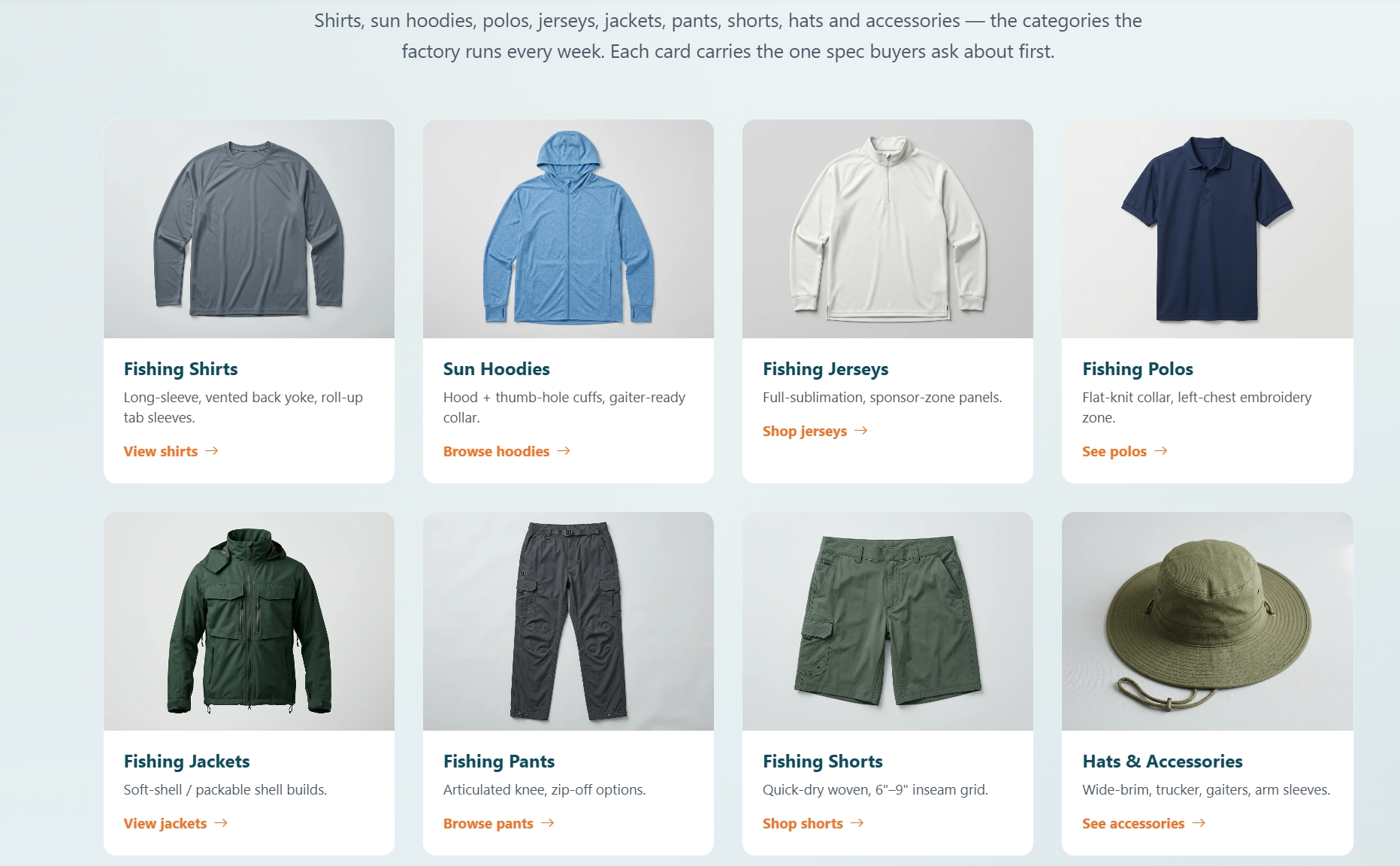
For tackle boxes, nets, hats, and branded apparel, private label is almost always the right answer at launch . Injection-molded tackle boxes at 500–2,000 pieces from existing molds, hoodies and buffs at 100–500 pieces per design — this is how you build a full brand catalog without tying up capital in tooling.
ODM upgrades pay off in the right situations. Moving fishing shirt fabric from 140 gsm to 170–200 gsm adds durability. Adding UPF 50+ coating makes it more marketable. Adjusting tackle box compartment layouts for a species-specific use case gives buyers a real reason to choose your version. These are solid product improvements that don't need a ground-up engineering investment.
OEM accessories justify the spend when you're building custom electronics housings or performance apparel with articulated patterns and multi-layer waterproof-breathable construction rated at 10,000–20,000 mm hydrostatic head . New injection molds for accessory parts start at $5,000–$20,000 per tool . That number needs a clear revenue path before you commit.
The Category-Model Matrix at a Glance
Product Category | Private Label Fits | ODM Sweet Spot | OEM Threshold |
|---|---|---|---|
Soft Plastics | Standard colorways, bulk SKUs | Durometer, salt load, tail action | Patented joints, proprietary materials |
Hard Baits | Logo + hardware upgrades | Weight distribution, lip angle, rattles | Electronics, CFD-validated profiles |
Fishing Rods | Logo wraps, handle cosmetics | Taper tuning, grip ergonomics | Proprietary layups, validated performance |
Spinning Reels | Spool engraving, knob color | Gear ratios, drag materials | CNC frames, patent-pending mechanisms |
Accessories / Apparel | Logo print, standard specs | Fabric weight, UPF, layout changes | Technical apparel, custom housings |
The pattern is the same across every category: private label fishing rods and lures get you to market fast; ODM builds a defensible product; OEM builds a defensible brand. The question isn't which model is best. It's which one fits where your brand stands right now.
Budget vs. Brand Stage Decision Matrix ($5K, $20K, $50K+)
Most fishing brand founders pick a sourcing model based on what they can afford right now. That's half the equation. The other half is what your brand needs at this stage to move forward. Those two things don't always point to the same answer.
The matrix below treats budget and brand stage as one decision, not two separate questions.
Budget Tier | Recommended Model | Best-Fit Categories | Brand Stage | Team Priority |
|---|---|---|---|---|
$5K–$15K | Private Label | Soft plastics, basic rods, accessory bundles | Launch (0–12 months) | Market testing, fast turnover, brand validation |
$15K–$35K | ODM | Species-specific hard baits, tuned reels, UPF apparel | Growth (1–3 years) | Supplier negotiation, field testing, wholesale outreach |
$35K–$50K+ | Hybrid (PL + ODM/OEM split) | Signature lures + standard accessory lines | Mature (3+ years) | IP management, patent filing, distributor onboarding |
Launch Phase: $5K–$15K
At this budget, private label isn't a compromise. It's the right tool for the job.
Your goal isn't to build the best crankbait on the market. Your goal is to find out whether anyone will pay for your brand's version of it. Private label lets you test that with real units, real customers, and real margin data — no tooling bill required.
Keep your SKU count tight. One or two hero products. Move fast, learn fast, reorder what works. Every dollar of early margin that doesn't go back into inventory should be saved for the next phase.
The rule here: use private label to generate cash flow, then put that margin into ODM development once a winning SKU is confirmed.
Growth Phase: $15K–$35K
Once you have a product-market fit signal, private label becomes a problem on your best SKUs. Someone else is selling the same jerkbait body. Your only defense is price or marketing spend. Neither one builds a brand.
ODM changes that. Shift your top performers into ODM development. Adjust the hook hanger position. Tune the lip angle for your target depth window. Build the version that clearly outperforms the factory standard. Keep private label running on fast-moving replenishment items — soft plastics, terminal tackle, accessories — where product differences don't drive the purchase decision.
This is also the stage where supplier relationships start to matter at a structural level. Negotiate sampling fees up front. Cap your revision rounds in writing. Brands that stall here are the ones who let ODM development run open-ended until it drains the budget.
Mature Phase: $35K–$50K+
The hybrid model isn't a fallback. It's a planned portfolio structure.
A useful benchmark: put 30% of your catalog into OEM flagship products once volume justifies tooling ownership. These are your defensible SKUs — the ones with exclusivity clauses, documented IP, and distributor leverage built in. The rest of the catalog can run on private label or ODM based on margin and velocity.
At this stage, the sourcing question shifts. It's less about which model to use and more about which SKUs belong in which tier:
OEM carries your brand's technical story
ODM carries your mid-range differentiation
Private label handles volume, bundles, and categories where buyers don't care who made the mold
The progression is straightforward: private label funds the learning, ODM funds the differentiation, OEM funds the moat. Each stage builds the capital and data that makes the next stage possible.
Risk Checklists and Mitigation Strategies per Model
Every sourcing model has its own failure modes. Know which risks belong to which model before you sign a PO. That knowledge is what separates a manageable setback from a cash-flow crisis that ends your brand in year one.
Private Label: The Risks Are Fast and Cheap to Trigger
Inventory overstock kills more private label fishing brands than bad products do.
The sequence is predictable. You find a decent crankbait body. MOQ is 500 pieces. You order the full run without testing. Three months later, you're sitting on 480 units that aren't moving.
Watch for warning signs early: CTR below 2–3% on TikTok or Instagram test campaigns is a hard stop signal
Run pre-sale landing pages before committing to a full PO. Move forward with the order if warm-traffic conversion hits 3–5%
Negotiate trial-order quantities (half-MOQ or smaller pilot lots) into your supplier contract. Do this before discussing price
Price erosion is the second trap. Your private label crankbait looks identical to four competitors' — because it is. Price becomes your defense on a marketplace listing. That's no defense at all.
Negotiate commercial exclusivity by region or channel for specific SKUs. Define the markets in writing and attach penalty clauses for breach
Build MAP (Minimum Advertised Price) policies with every distributor from day one. Enforce them via chargebacks or supply suspension — not polite emails
Add bundled value that can't be price-compared: digital fishing guides, species-specific rigging charts, community access. The hardware is identical. The offer doesn't have to be
Compliance is where private label brands get blindsided. The factory made it. That does not mean it's approved for your market.
Treat every private label product as custom-built for compliance purposes. Specify CE, CPSIA, REACH, or RoHS requirements per target market in the PO
Require lab test reports, certificates, and labeling proofs before any shipment leaves the factory
ODM: The Risks Live in the Gaps Between What You Agreed and What They Built
ODM risk concentrates in two places: IP ownership and performance variance.
Design leakage is the threat most brands underestimate. That ODM jerkbait factory has sold a near-identical body to six other brands. Your "exclusive" color and modified lip angle have no protection unless your contract says they do.
Sign NDA + NNN (Non-disclosure, Non-use, Non-circumvention) agreements that specify territory and scope. Skip generic NDAs — they don't hold up in Chinese courts
Register trademarks and design patents in both the manufacturing country and your sales markets. Reference those registration numbers in the supply contract
Add liquidated damages clauses for breach. A penalty structure is what gives an exclusivity clause real teeth
Tooling and modification ownership creates disputes that destroy supplier relationships at the worst possible moment.
Before paying a single development invoice, get written confirmation of who owns the design files, tooling, fixtures, and any derivative modifications
State in the contract that all tooling belongs to the buyer. Require delivery or secure destruction of factory-held files on termination
Use escrow for critical CAD files tied to payment milestones on larger development programs
Performance mismatch is an ODM-specific failure mode. You've changed functional parameters — lip angle, weight distribution, durometer — without full engineering validation. That's where things break.
Use a gate-driven development sequence: concept sample → development sample → pre-production sample → packaging-confirmed approval sample. Don't skip gates to save time
Run field testing with real anglers before production approval. Define quantitative acceptance criteria upfront — sink rate within ±10%, action rating within a defined band
Tie milestone payments to passing each gate, not to calendar dates
OEM: The Risks Are Slower, Larger, and Harder to Reverse
OEM failure modes don't show up in week three. They build up over six to twelve months, then surface as a single catastrophic number.
Capital drain is the primary OEM risk for fishing brand founders.
Flag the danger zone early: tooling cost approaching 15–20% of your projected Year 1 revenue means the math does not work
Phase your NPI process — EVT (engineering validation), DVT (design validation), PVT (production validation) — with hard quality gates and exit criteria at each stage
Cap tooling spend in the contract. Require the factory to justify any cost variance with documented DFM (design for manufacturing) findings before you approve additional spend
Production delay and engineering iteration drag is what consumes the capital. Factories issue engineering change orders. Change orders shift timelines. Timeline shifts miss seasonal windows. A spinning reel designed for spring bass season that's still in DVT in February earns nothing until the following year.
Mandate formal change control procedures in your RFQ: ECO templates, documented approval paths, and cut-in timing for every change
Lock logistics terms — Incoterms, packing specs, transit testing standards — before production ramp begins, not after
Build buffer stock plans for peak seasons from day one. Fishing is seasonal. A six-week production delay hits revenue harder than most founders expect
Regulatory non-compliance at the OEM level is the most expensive version of this problem. Your tooling investment is already sunk by the time it surfaces.
Define compliance requirements in the RFQ, not after sampling: standards, test methods, label language, required documentation, and audit rights
Require third-party accredited lab testing before mass production. No passing report, no shipment authorization
Collect RoHS, REACH, FCC, and CE declarations from every contract fishing apparel manufacturer. This matters for any product that includes electronics — fish finders, LED lures, bite alarms
The Risks That Apply to All Three Models
Three controls belong in every fishing tackle supply chain, regardless of the model you're running:
Supplier due diligence — Before the first order, verify financial stability, production capacity, quality system certifications (ISO 9001 minimum), regulatory history, and their continuity plan if a key sub-supplier fails
Dual sourcing — Identify backup suppliers for any critical component or packaging material. Single-source dependency on one factory for your hero SKU is a business continuity risk — not just a sourcing preference
Golden Sample QC — Approve a labeled, photo-documented reference sample for every SKU. Make it the legal and operational benchmark for acceptance. Attach it to the PO and run AQL-based incoming inspection against it on every production lot
The goal isn't to eliminate risk — that's not possible in contract manufacturing for fishing gear. The goal is to know which risks you're carrying and have a written mitigation in place before the factory starts production.
Case Studies: Success and Failure Patterns in Fishing Brand Development
Three patterns show up again and again across fishing brand failures. Bad products are rarely the issue. The real problem is brands that never figured out what their customers valued.
The Wrong Pitch Kills the Right Product
One fishing lure brand spent its first few years marketing around color and pattern. Custom paint schemes. Dozens of colorways. The whole catalog built around looking good in the water.
The problem: that pitch spoke to about 10% of the market — and that 10% had the lowest willingness to pay of any buyer segment the brand had. They liked the aesthetics. They didn't pay a premium for them.
The company dug into what was driving purchase decisions. The story was different from what they expected. Specific performance features — action at certain retrieve speeds, durability under repeated strikes, weight balance for casting distance — those were what serious buyers cared about. Those buyers paid more. A lot more.
The brand rebuilt its messaging around those features. Pricing got repositioned to match what that segment was willing to spend. The U.S. market — once a secondary revenue stream — became the majority of their business.
The lesson for private label and ODM sourcing strategy: your differentiation can't live in the mold. It has to live in the story you build around the product's real functional advantages. A private label crankbait with generic feature copy is fighting a price war it cannot win. The same body, marketed around one specific and credible performance claim, reaches a different buyer — one who pays more.
Community First Outperforms Catalog First
The second pattern cuts across brand stages. Fishing brands that built distribution through creators and community before scaling SKU count outperformed brands that led with product breadth. This held true across stages, and the gap was clear.
The mechanics are repeatable:
Short-form video with a three-second hook
Creator partnerships built on authenticity, not production value
Engagement formats — blind brand tests, GPS-based events, challenge structures — that drive participation, not passive views
Brands running this playbook reported engagement spikes above 200% compared to standard product-focused content.
The sourcing connection is direct. A community-first brand can validate a new ODM design before the tooling invoice is due. Run a soft-launch teaser to your audience. Measure response. No engagement? You haven't built the mold yet. That's the difference between a $1,500 test and a $15,000 mistake.
The Failure Pattern Is Almost Always the Same
Strip away the specifics and most fishing brand failures trace back to one of three root causes:
Messaging misaligned with buyer values — marketing what looks good instead of what performs
Cosmetic differentiation mistaken for product differentiation — a new color is not a new product
Pricing disconnected from perceived value — launching at a price point the target segment never considered realistic
Brands that scaled shared a simpler playbook. Find the product attribute that drives the highest willingness to pay. Build every touchpoint around that attribute. Price to match the value, not the cost. Then use community distribution to spread the story once the signal is confirmed.
That framework works whether you're running a private label soft plastic line or an OEM spinning reel program. The supply chain model determines what you own. The marketing discipline determines whether anyone pays for it.
5-Minute Self-Assessment Flowchart for Supply Chain Selection
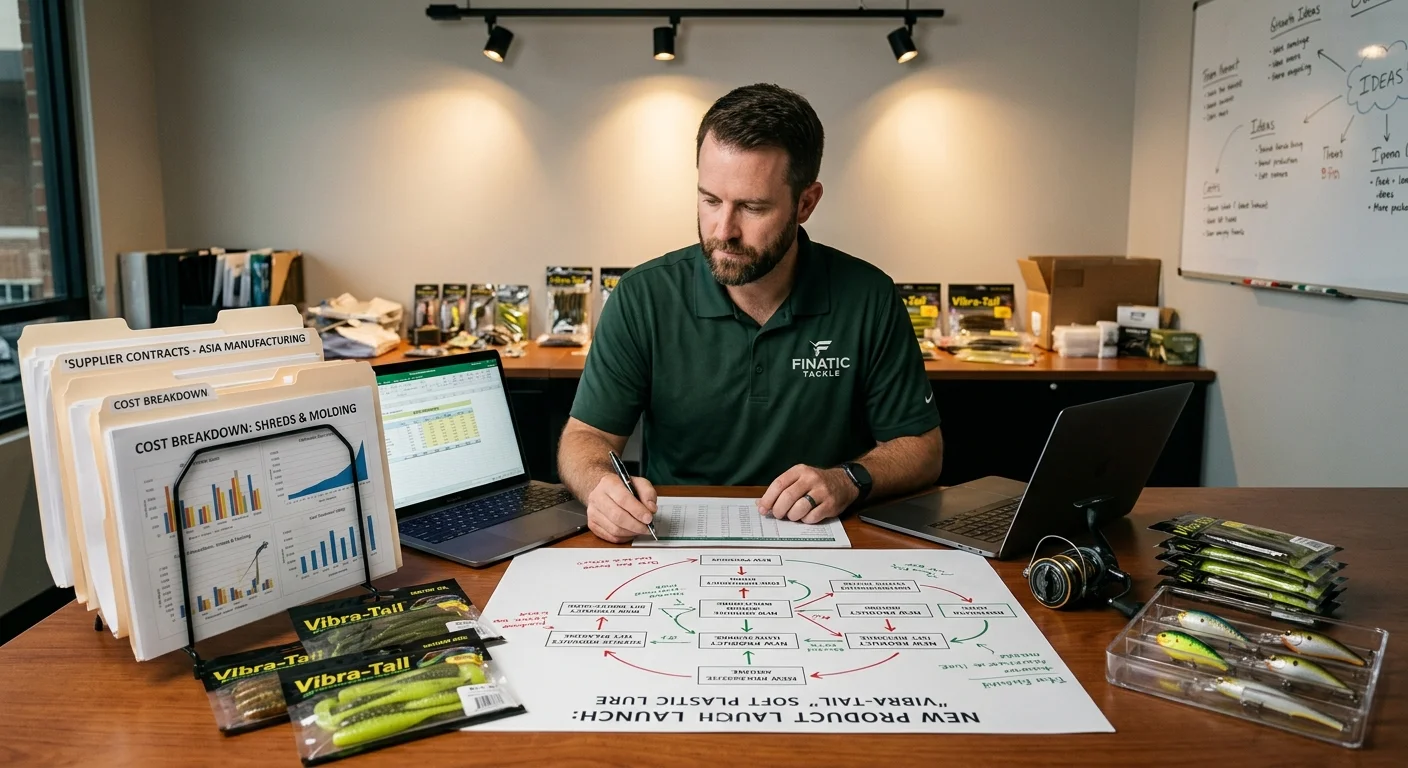
Stop overthinking the model. Three questions cut through most of the confusion.
Question 1: How much capital do you have right now?
- Under $10K → Private Label
- $10K–$35K → ODM
- $35K+ → OEM or Hybrid
That's your starting branch. Everything else is a filter layered on top.
Question 2: Do you have validated demand?
No sales data, no waitlist, no pre-sell signal? Don't commit to full inventory yet. Run a landing page. Collect emails. Let the market show you what it wants — before the factory locks you in.
Question 3: Can you execute the model you're pointing at?
- ODM needs 8–12 weeks of sample iteration. Can you fund that runway?
- OEM needs design files, engineering oversight, and EVT → DVT → PVT staging. Do you have that capacity — or a budget to hire it?
The fast routing table:
Situation | Right Move |
|---|---|
Low capital + unvalidated demand | Pre-sell first, then Private Label |
Low capital + proven demand | Private Label, order MOQ/2, test with ads |
Moderate capital + testing runway | ODM, define 3 measurable specs before sampling |
Higher capital + design capability | OEM or Hybrid |
Answer those three questions straight. You'll already know which path fits. The framework doesn't decide for you — it just makes the answer harder to ignore.
15 Critical Questions to Ask Your OEM/ODM Manufacturer Before Quotation
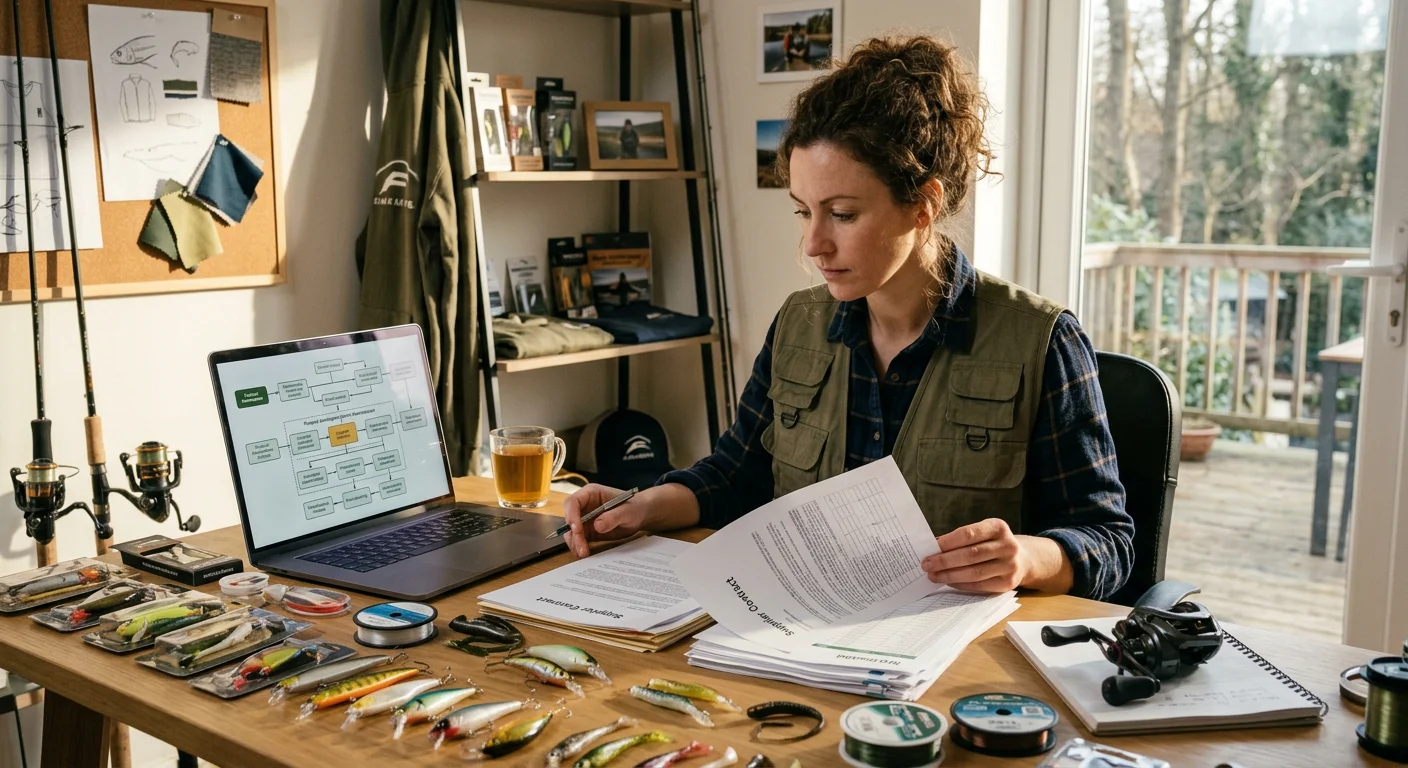
Most fishing brand founders get burned not because they picked the wrong factory — but because they asked the wrong questions before signing anything.
A factory that sounds perfect on a Zoom call can still deliver wrong tolerances, miss your season, and sell your jerkbait design to a competitor six months later. The difference between that outcome and a clean production run comes down to what you put in writing during the RFQ stage.
Send these 15 questions as a numbered list. Require numeric answers — not vague assurances. Attach the responses to the quotation as binding commercial terms. A factory that won't answer in writing? That's your answer.
1. What is your exact MOQ per SKU and per colorway, and what price tiers apply at 1×, 2×, and 5× MOQ?
Get the full price ladder upfront. Also ask straight out: "Can you offer a 15–20% unit-price discount on the first 1–3 trial runs once annual forecast is confirmed?" Frame it as a pilot production discount tied to volume commitment. Plenty of fishing tackle contract fishing apparel OEM/ODM manufacturers will trade short-term margin for a confirmed long-term account.
2. After full tooling payment, does the mold become our property — with serial number and asset list attached to the contract?
This question stops a specific type of problem before it starts. The clause you need in writing: tooling is owned by the buyer, stored at the factory, and can be relocated at any time with written notice. The factory must provide disassembly, packing, and handover documentation if you ever move it. Also confirm whether they're building new tooling from your drawings or adapting existing molds. That changes both cost and exclusivity exposure.
3. Will you sign our NNN agreement in Chinese and English before receiving drawings, BOM, or customer list?
A standard NDA isn't enough in cross-border fishing tackle sourcing. You need Non-Disclosure, Non-Use, and Non-Circumvention clauses that cover three things clearly: no use of your specs for other buyers, no direct approach to your customers, and no entry into your markets. The legal entity named on the manufacturing contract must sign it — not a sales rep's personal signature.
4. What are your dimensional tolerances, and what Cp/Cpk targets do you hold across production batches?
Ask for a tolerance table attached to the quote. For fishing reel frames and hard bait hardware, standard OEM benchmarks run ±0.05–0.10 mm on precision closures and ±0.10–0.20 mm on standard stamped parts. For any functional part — a lure lip, a bail mechanism, a drag knob — ask: "What is your guaranteed force range and maximum deviation from nominal?" Then confirm whether tolerances are checked per hour, per lot, or only at final QC. That last detail tells you more about their process than the tolerance numbers themselves.
5. Can you provide editable STEP/IGES and 2D drawings with tolerances before tool steel is ordered?
Require at least one DFM round with marked undercuts, draft angles, and gate locations before any mold machining begins. Get this in writing: "No tool cutting until Customer Drawing Release is signed." Skipping this step is how brands end up with a crankbait body that runs 40% deeper than spec — with no one to bill for the revision.
6. What is your standard sampling lead time, and how many revision rounds are included in the tooling price?
Here are benchmarks worth knowing: soft tooling or 3D-print prototypes arrive in 7–14 days. First off-tool injection-molded samples run 20–35 days. Most OEM fishing gear factories include one to two free adjustment rounds in the tooling fee. Anything beyond that gets charged per modification. Confirm whether full QC reports come with each sample lot. Missing this detail is how development costs double without you noticing.
7. Can you provide current ISO 9001 certification, REACH/RoHS compliance statements, and CE test reports — with certificate numbers and renewal dates?
For any fishing product entering EU or US markets — hard baits with electronics, LED components, or soft plastics with chemical treatments in particular — third-party compliance documentation is not optional. Ask whether they can issue an EU Declaration of Conformity or whether you'll need to arrange independent lab testing. Verify the issuing body, not just the certificate number.
8. What are your standard payment terms for new OEM clients, and can milestone payments be tied to third-party inspection reports?
Common structures: 50–70% upfront on tooling with 30–50% after T1 sample approval; 30% deposit and 70% before shipment on mass production. The question most brands forget to ask: "Can part of the payment be tied to passing AQL inspection?" A factory comfortable with that clause is a factory confident in its own QC. One that pushes back hard is telling you something.
9. Can you provide recent third-party lab reports from SGS, TÜV, or Intertek for material composition, RoHS, and mechanical load testing?
Specify which tests matter for your product category: material and coating verification, composition thickness, and mechanical strength under static and dynamic load. Ask whether custom lab test costs are included in the quotation or billed as a separate line. The answer tells you what's already been validated — and what you'll be paying to find out later.
10. What defect rate (PPM or %) is contractually acceptable, and what is your written procedure for rework or replacement above AQL threshold?
Consumer goods benchmarks: AQL 0.65–1.5 for critical and major defects; around 2.5 for minor. Require a written procedure that covers two things: rework or replacement for quantities above agreed AQL, and a credit note or refund path if replacement isn't possible or arrives late. Also ask how long batch samples and traceability data are retained. That retention policy is your dispute resolution window if a problem surfaces six months after delivery.
11. Do you offer territory exclusivity, and at what minimum annual purchase volume does it stay in effect?
Exclusivity without a volume floor is a clause with no teeth. Mid-tier fishing tackle OEM factories trigger exclusivity at 50,000–200,000 units per year per SKU, or USD $100,000–$300,000 per year. Require a clause that allows renegotiation if volume isn't met for 12 consecutive months. Don't accept a clause that cuts exclusivity without notice. That distinction matters if you miss a season due to a supply chain disruption.
12. What is your standard mass production lead time from sample sign-off to EXW/FOB ship date — for first orders and repeat orders?
First-order benchmarks: 30–60 days depending on complexity and material procurement cycles. Repeat orders with a stable supply chain: 20–45 days. Ask for their on-time delivery rate over the last 12 months. A factory that can't produce that number doesn't track it. A factory that doesn't track it has no accountability mechanism when your spring bass season order arrives in July.
13. Can we conduct on-site audits before contract signing and send third-party inspectors during production and pre-shipment?
Confirm specific access: production floor, warehouse, and QC lab — not just the showroom. Confirm cooperation with inspection companies for AQL sampling. Any friction during the pre-contract conversation is a preview of what negotiations will look like when something goes wrong in production.
14. What packaging formats can you supply, and are design fees, plate costs, and dieline development included in the quotation?
Get confirmation on retail-ready formats — blister cards, clamshells, printed master cartons, EVA inserts, and instruction leaflets. MOQ for custom printed packaging runs 3,000–10,000 sets. Packaging design fees not itemized in the quote? Expect them to appear as a surprise line item after your first sample approval. Ask about this upfront and get it in writing.
15. Do you offer ongoing engineering support for version 2.0 upgrades and seasonal updates, and what is your fee structure for minor mold changes versus full retooling?
A third-party private label fishing manufacturer that supports initial production only is a short-term partner by design. Ask for their policy on minor mold adjustments — texture changes, small dimensional tweaks — versus complete new tooling. Get their standard response time for reviewing updated specs and issuing a revised quotation. The factories worth building a long-term fishing brand supply chain on treat post-launch engineering as a service, not a favor.
Send all 15 questions together in a numbered list. Require written, numeric responses — MOQ figures, percentage discounts, tolerance specs, lead times, volume thresholds. Any answer that arrives as a verbal assurance on a call belongs back in the email chain as a written commitment before the quotation is signed.
These questions won't make a bad factory into a good one. But they make it impossible for either side to claim they didn't understand the terms — and in contract manufacturing for fishing gear, that clarity is worth more than the cheapest unit price on the sheet.
Conclusion
The fishing tackle industry doesn't reward the brand that picked the right model. It rewards the brand that picked the right model for right now .
Private Label gets your first SKU on Amazon fast — before your competitor even finishes their mold deposit wire transfer. OEM gives you the edge to stand out once you've confirmed what your customers buy. ODM builds a moat around your brand. One that's hard to copy. None of these models is better than the others. Each one fits a different stage of your business.
You've got the decision matrix. You've got the real cost numbers. Plus, you've got the 15 questions to fire at any fishing apparel factory before you spend a dollar. That's not theory — that's your first supplier conversation, laid out and ready to go.
So here's your next step: pick one product category . Run it through the self-assessment flowchart. Send your first RFQ this week.
Anglers who build lasting fishing brands don't overthink the model. They test it, learn it, then scale it.
Start small. Start smart. Start now .