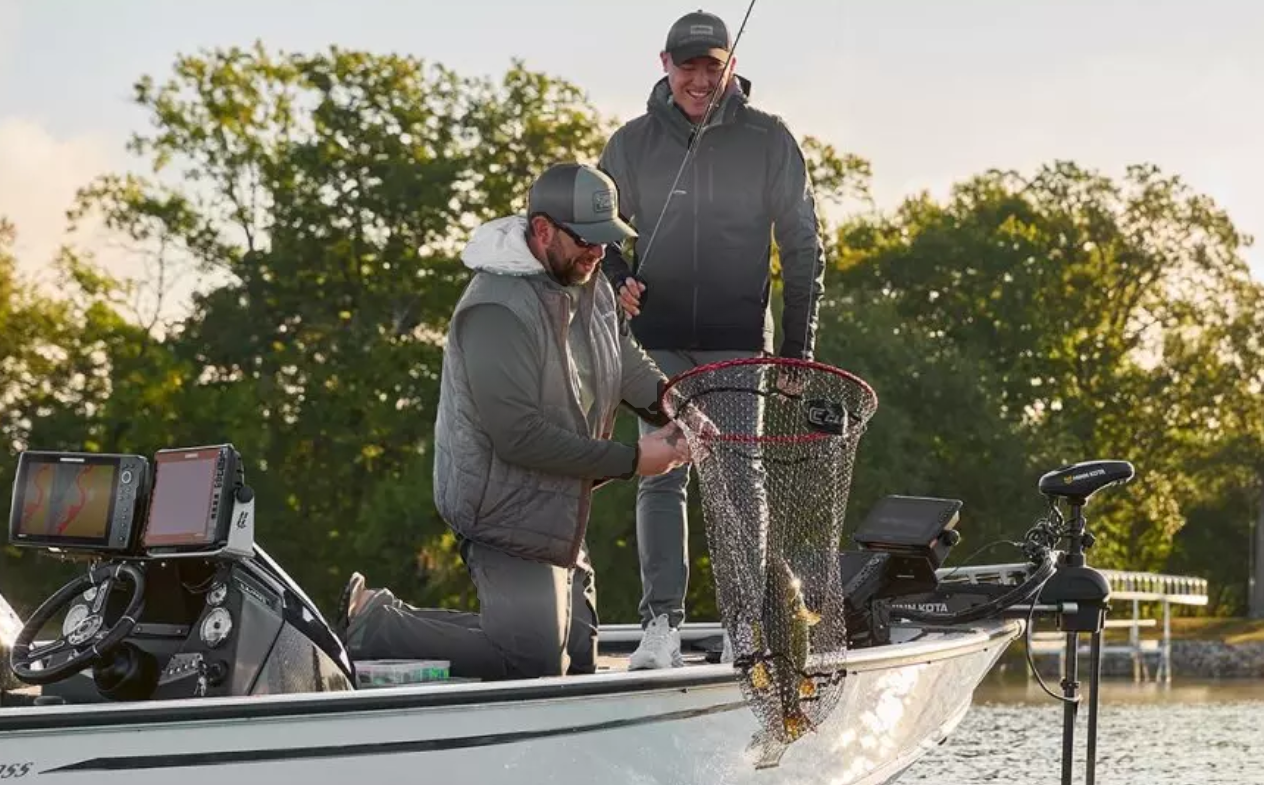
Spend enough time on the water and you'll notice something. The angler in the long-sleeve shirt is still fishing at 2 p.m. Everyone else is digging through the cooler for the sunscreen they left at home.
Most people get this wrong — and so do many apparel buyers. UPF and SPF are not the same thing. One is built into the fabric and rated on a standardized scale. The other washes off your shoulders the moment you net a fish.
Knowing the difference between UPF vs SPF matters. For anglers, it affects every hour you spend exposed on the water. For buyers sourcing UV blocking clothing , it's the line between a solid product claim and a compliance problem.
Here's the clearest breakdown of both.(Here you can check out the custom-made sun-protective fishing suit collection.)
UPF vs SPF Core Parameter Breakdown
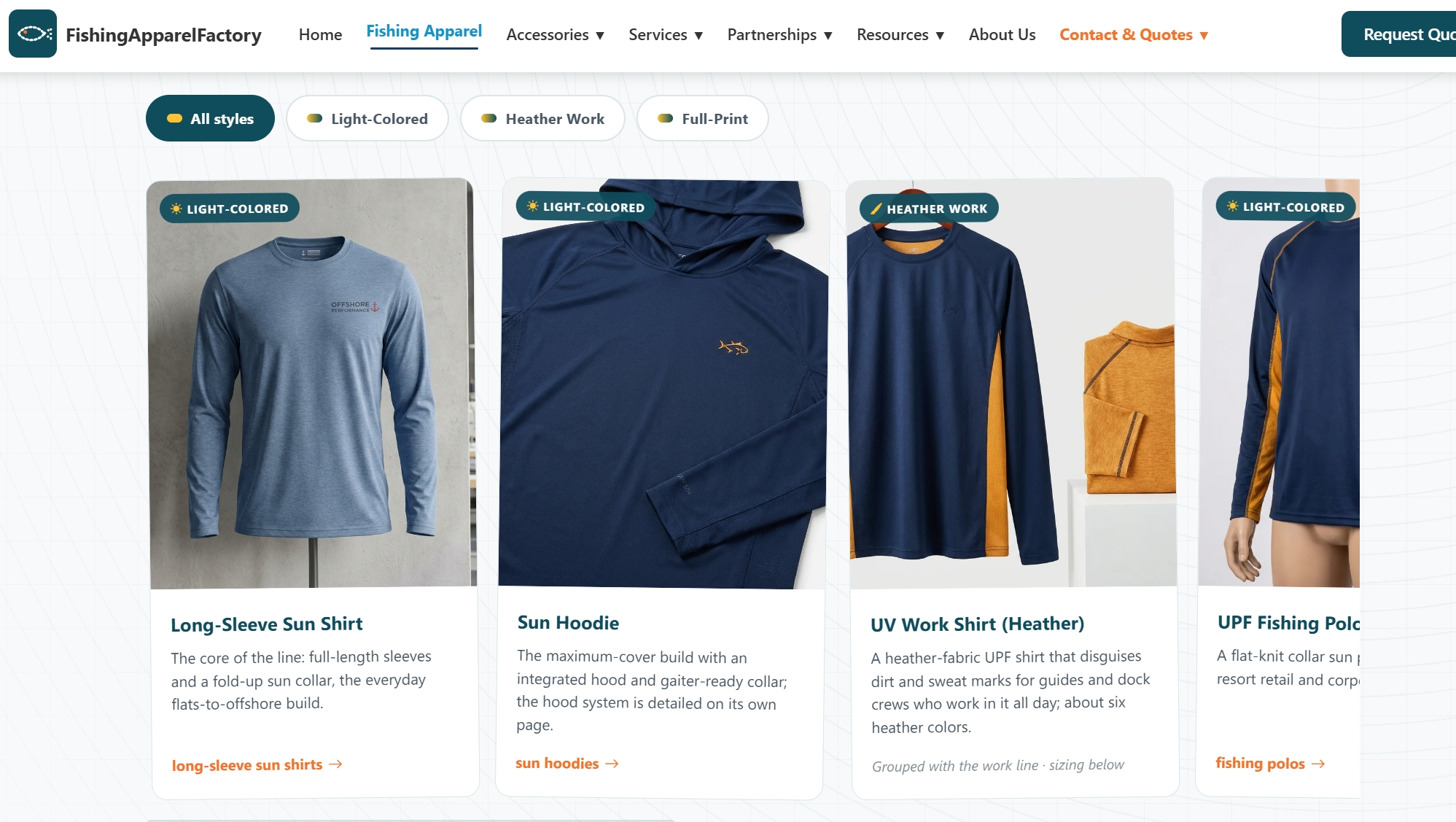
Two different rating systems. Two different things being measured. And yet the labels get swapped on product pages, in catalog copy, and in casual conversation all the time.
The table below cuts through that confusion.
Parameter | UPF (Sun-Protective Fabric) | SPF (Topical Sunscreen) |
|---|---|---|
What it rates | Fabrics and clothing | Sunscreen applied to skin |
UV spectrum covered | Both UVA + UVB | UVB only (unless labeled broad-spectrum) |
How it's measured | Lab spectrophotometry through textile samples | Human-subject testing at 2 mg/cm² application |
What the number means | UPF 50 = ~2% UV transmission, ~98% blocked | SPF 50 = ~98% UVB blocked; SPF 30 = ~97% UVB blocked |
Where it protects | Wherever the garment covers | Only where you apply it |
How long it lasts | Built into the fabric — lasts with the garment | Temporary; requires reapplication after sweat or water |
Best for | Large-area, all-day, continuous coverage | Face, ears, neck, hands, and any uncovered gaps |
Three Things Worth Holding Onto
UPF is about fabric. SPF is about skin. They run on separate systems. One does not replace the other.
UPF tests for both UVA and UVB. SPF, by default, measures UVB protection only. A sunscreen needs a broad-spectrum label to cover UVA. Even then, that UVA standard is less strict than UPF textile testing.
UPF 50 and SPF 50 are not the same number doing the same job. Both land near the same blocking percentage — around 98% — but the methods behind them are different. For buyers writing product claims, that gap matters a lot. For anglers using both, it means the shirt and the sunscreen each cover something the other one cannot.
Regulatory Testing Frameworks & Certification Standards
Every UPF rating on a hangtag comes from a lab test. The method used matters more than most buyers ever stop to check.
Sunscreen gets tested on human skin. UPF-rated textiles go through a different process — in vitro, no human subjects involved. A fabric sample goes into a spectrophotometer. UV light passes through it across both UVA (320–400 nm) and UVB (290–320 nm) ranges. The transmitted energy gets weighted against an erythemal action spectrum. The output is one number: how many times the fabric cuts UV exposure before it reaches skin.
The formula is simple:
UPF = UV irradiance incident on fabric ÷ UV irradiance transmitted through fabric (erythema-weighted)
UPF 50 allows about 2% of erythemal UV to pass through. UPF 50+ tightens that threshold even further.
The physics stay the same across standards. What changes are the assumptions built into the test conditions.
The Major Standards and What They Require
AS/NZS 4399 (Australia/New Zealand)
This is the leading certification standard for sun protective fabric in the Southern Hemisphere. Labs run tests on new, dry, unstretched fabric using a Melbourne solar spectrum based on January 1st — peak summer sun conditions. Australia's ARPANSA certification program requires testing to the 2020 edition , with reports no older than 12 months at the time of licensing. The program issues physical swing tags. Buyers get a visible, auditable certification mark on the product. Label wording is prescribed — there's no room to rewrite the phrasing yourself.
EN 13758-1 and EN 13758-2 (Europe)
These are two linked standards. Part 1 covers test methodology. Part 2 governs garment labeling and classification. To make a legal UV protection claim in Europe, a garment must hit UPF ≥ 40 and average UVA transmission ≤ 5% . Fall below either number and the garment cannot be marketed as UV-protective — full stop. European buyers sourcing UVA UVB protection clothing should treat both figures as hard minimums, not rough targets.
EN 13758-2 also sets physical coverage requirements. Upper-body garments must cover from the base of the neck to the hips. Sleeves must reach at least three-quarters of arm length. Lower-body coverage must extend from the waist to below the kneecap.
AATCC TM 183 + ASTM D6603 (United States)
This is the standard testing method for UV blocking clothing in the US market. The approach is spectrophotometric and in vitro — consistent with other global frameworks. The key difference: the US has no federal labeling regulation matching EN 13758. AATCC TM 183 proves the performance. ASTM D6603 controls how that performance gets communicated on labels and in marketing copy — keeping claims in line with FTC truth-in-advertising rules. Any buyer writing product descriptions or catalog content needs both standards working together.
UV STANDARD 801 (International)
This one takes the most conservative approach. Labs test fabric under real-use stress — wet, stretched, and worn — rather than clean lab conditions. The same fabric will score lower UPF ratings under UV STANDARD 801 than under AS/NZS or EN 13758. For buyers sourcing UPF 50+ apparel for demanding activities like fishing, swimming, or endurance sports, this standard gives the most accurate picture of real-world performance.
SPF Testing Falls Into a Separate Regulatory Category
Sunscreens are not textiles. In the US, they're regulated as OTC drugs . In the EU and Australia, they fall under cosmetics or quasi-drug categories. SPF gets measured in vivo — on human volunteers, using a solar simulator to find the minimum erythema dose with and without the product. The ratio between those two values produces the SPF number.
That biological test process shares nothing with spectrophotometric fabric testing. A spf fishing apparel supplier using "SPF" to describe a garment's UV protection isn't just using loose language — they're applying a measurement system built for a different product category. For buyers managing product claims, that's a real compliance risk. Flag it now, not later.
What to Demand From Any Supplier Test Report
Third-party lab reports for sun protective garments wholesale must include — at minimum — the following:
Exact standard and edition cited (e.g., "Tested per AS/NZS 4399:2020" or "Tested per EN 13758-1:2007, classified per EN 13758-2")
UPF value matching the hangtag claim — reports showing a range across samples must reflect the worst-case result on the label
Average UVA transmission percentage — for EU compliance, demand UVA ≤ 5% alongside UPF ≥ 40
Test conditions documented : new vs. laundered, dry vs. wet, relaxed vs. stretched — swimwear reports should always include wet and stretched data
Issuing laboratory with recognized accreditation — Hohenstein, ARPANSA, or equivalent third-party labs carry real weight; in-house mill reports and marketing PDFs do not
A UPF fishing apparel supplier who can't produce a report covering every one of those points has no real foundation for their textile UV certification claim. For buyers building a product line they can stand behind, that's exactly where your due diligence begins.
B2B Sourcing Checklist for UPF-Rated Performance Fabrics
Most sourcing decisions go wrong not at the UPF fishing apparel factory, but in the spec sheet. A UPF fishing apparel wholesaler sends over a fabric card. The GSM looks right. The price works. Then somewhere between sample approval and bulk production, nobody thought to ask: does this block UV, and can you prove it?
Here's a practical checklist built for buyers adding UPF-rated performance fabrics to their line. Use it before you commit to a single yard.
Start With the Fiber, Not the Finish
Fiber choice is where ultraviolet protection factor performance either gets built in or bolted on. Bolted-on finishes can wash out.
Synthetic blends are your safest baseline for UPF 30–50+:
100% polyester warp or circular knits deliver stable, built-in UV absorbance. No finish needed to hit UPF 30+.
Polyester/spandex blends (8–15% elastane) work well for sun hoodies, fitted fishing jerseys, and performance tops. The stretch stays controlled enough to hold coverage without opening up the knit structure.
Sourcing cotton? The rules change:
Bleached cotton loses its natural UV-absorbing compounds. Go with unbleached or low-processed cotton wherever possible.
To reach UPF 30+, you need a dense weave (high-thread-count poplin or twill) plus a verified UV-absorbing finish or dye system. Neither element alone will get you there.
One more point on construction: loose jerseys and open-mesh fabrics won't cut it unless lined or layered. Your tech pack must call out cover factor clearly. Require the fishing apparel supplier to document how knit tightness supports the UPF claim.
GSM Targets by Product Category
Use these as sourcing baselines — then validate each one with accredited lab testing.
Product Type | Construction | Target GSM | Expected UPF Range |
|---|---|---|---|
Lightweight sun tees / fishing tees | Single jersey, 100% polyester or poly/spandex | 120–140 gsm | UPF 15–25 (verify per colorway) |
Performance shirts / polos | Interlock or piqué, polyester-rich blend | 150–170 gsm | UPF 30–40 |
Sun hoodies / longline fishing jerseys | Dense jersey or double-knit, poly/spandex 8–15% | 180–220 gsm | UPF 50+ (requires dry/wet/stretch testing) |
Checklist item: Write the minimum acceptable UPF per GSM band straight into your tech pack and purchase order. Don't leave it as a verbal agreement.
What Every Lab Report Must Include
Any fabric claiming UPF 30 or above needs testing from an ISO/IEC 17025-accredited lab . This applies to every new fabric and every new colorway. The report must contain:
Numeric UPF rating (e.g., UPF 30, 50, or 50+)
Mean UVA and UVB transmission percentages
Dry UPF value as a baseline
Wet UPF value — required for anything sold for fishing, swimming, or high-sweat use. Moisture reduces protection in ways the dry number won't show.
Stretch condition UPF — recommended for any elastane blend
Standard code and edition stated clearly (AATCC TM 183, AS/NZS 4399, EN 13758-1, or UV STANDARD 801)
Wash cycle retention data — how many cycles were simulated, and what UPF percentage remained after laundering
A report missing wet-condition or post-wash data is not a complete report. For sun protective garments wholesale , that gap creates liability after the product ships.
Label Language: What Works, What Doesn't
Getting the textile UV certification claim right on-product matters more than most buyers expect — for both regulatory compliance and customer trust.
Safe wording:
- ✅ "UPF 50+ tested per AS/NZS 4399. Blocks >98% of UVA & UVB radiation."
- ✅ "Made with dense-knit polyester for consistent ultraviolet protection factor performance."
Wording that creates real problems:
- ❌ "SPF 50 fishing shirt" — SPF applies to topical sunscreens. Using it on a garment can trigger cosmetic or OTC drug regulations in multiple markets.
- ❌ "SPF-rated fabric" — same issue, different phrasing.
- ❌ "10 hours of sun protection" — duration-based claims fall outside textile UPF standards and read as misleading under FTC guidelines.
Every UPF 50+ apparel label should carry a functional limitation statement. Something like: "UPF protection may decrease when fabric is stretched or wet. Use sunscreen on all exposed skin." This language reflects actual lab findings. It sets accurate expectations and protects you from returns and complaints rooted in misunderstanding.
Pre-Purchase, Sampling, and Bulk Production Controls
Before you commit:
- Validate fiber content against the certificate of analysis — not just the supplier's word.
- Request GSM data and measure it in-house.
- Verify existing test reports, plus OEKO-TEX certification if chemical safety or sustainability is part of your brand story.
During sampling:
- Order 5–10 yards per colorway for independent lab testing before approving bulk.
- Test colorfastness to light and washing. Darker colors often contribute to higher UPF — but only if the color holds.
- Check shrinkage and dimensional stability. Fabric that shrinks after washing changes density. Changed density changes UPF.
At bulk production:
- Require a bulk strike-off from actual production rolls. Confirm that color, GSM, and finish match the lab-tested samples.
- Make your PO conditional on delivery of lot-specific UPF test summaries from an accredited lab, tied to roll numbers and dye lots.
- For large orders, confirm the UPF fishing apparel manufacturer runs batch-level UPF testing . Prototype results mean nothing if production inconsistency isn't caught.
Portfolio Tiers Worth Building Toward
Buyers building a full UV blocking clothing range should think in three layers:
Entry level: UPF 30, basic moisture-wicking, accessible price point.
Mid-tier: UPF 50, multi-function finishes (wicking + antimicrobial), OEKO-TEX certified.
Premium: UPF 50+ tested under UV STANDARD 801 or AS/NZS 4399, with sustainability credentials (GRS or OCS) for buyers whose retail partners are asking those questions.
The jump from mid-tier to premium isn't just a marketing story. UV STANDARD 801 tests fabric under real-use stress — wet, stretched, worn. The UPF number on the label reflects what the garment does on the water. For fishing and outdoor performance categories, that's the difference between a claim that holds up and one that doesn't.
Marketing Claim Compliance & Risk Mitigation for Brands
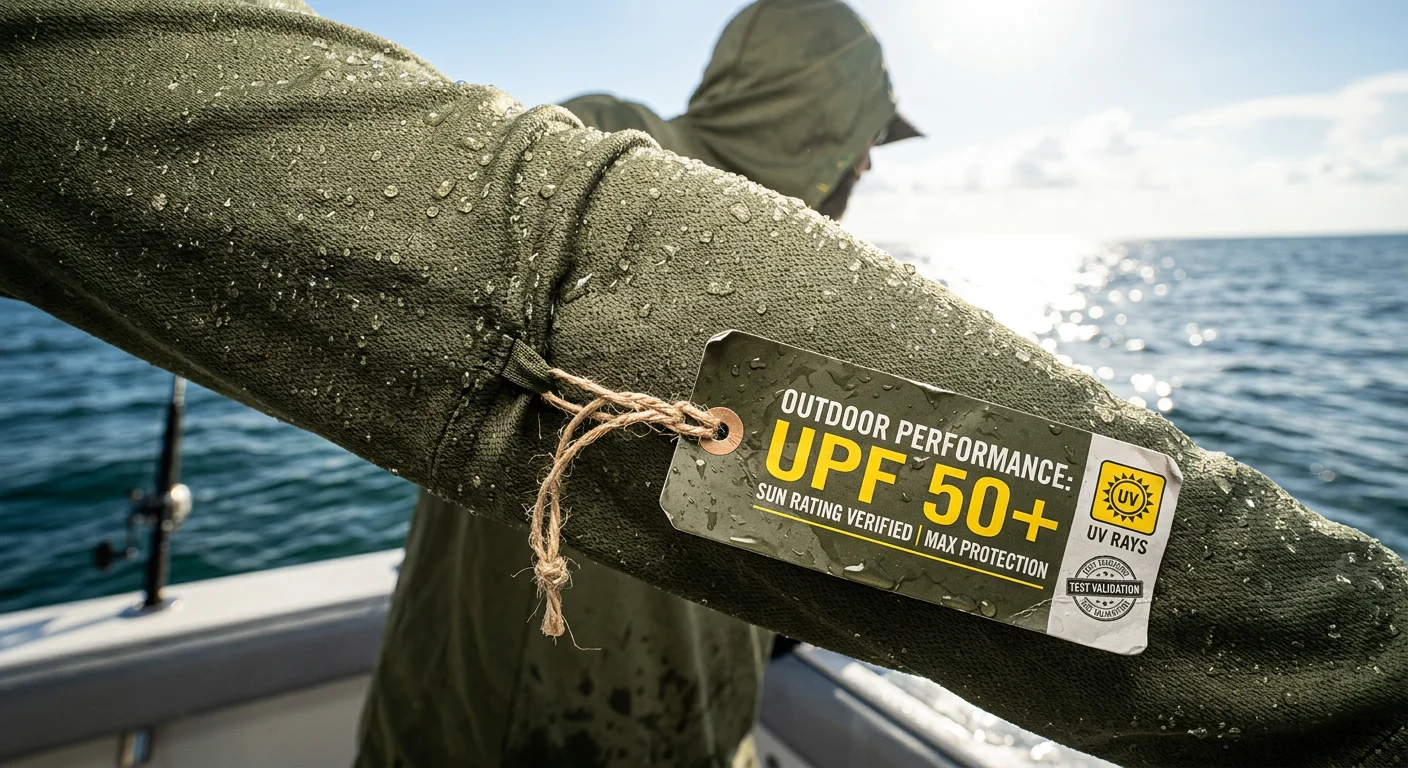
The words on your hangtag are a legal document. Not a metaphor — a fact.
Brands lose this perspective somewhere between design and product launch. That's where compliance problems start. Your UPF 50+ apparel label has one job: make a defensible, substantiated claim. Not an aspirational one.
Where Brands Get It Wrong
The most common error? Using "SPF" to describe a garment's UV performance. It looks like a small mistake. It isn't. SPF is a regulatory term tied to OTC drug and cosmetic frameworks. Applying it to UV blocking clothing can push your product into a different compliance category altogether. Use "UPF-rated textile UV protection" instead. Full stop.
A few other phrases that need serious legal review before appearing in your copy:
❌ "Prevents sunburn" — a medical claim with no textile testing pathway to support it
❌ "Blocks all UV" — no fabric does this
❌ "Replaces sunscreen" — FTC guidance contradicts this directly
❌ "All-day protection" — duration claims fall outside any textile UV certification standard
❌ "Medical-grade skin protection" — this draws pharmaceutical regulatory scrutiny
Building Claims That Hold Up
Clean language builds a stronger position. These formulas work:
✅ "UPF 50+ textile UV protection for covered areas."
✅ "Broad-spectrum UVA/UVB protection in certified sun protective fabric ."
✅ "Performance fabric engineered for long-lasting UV protection, worn and cared for as directed."
Look at what these share: each one describes the fabric's function and stops there. No overclaiming. No implied sunscreen replacement.
One more item belongs on every product page — a durability qualifier. UPF protection drops as fabric is stretched, wet, or washed repeatedly. Hot washes and chlorine exposure speed this up. This isn't a weakness to hide. It's accurate, FTC-consistent language. It sets real expectations and keeps returns manageable.
Store third-party lab reports for every ultraviolet protection factor claim you publish. A claim gets challenged — substantiation is the only thing between you and a correction order.
Angler Sun Protection Protocol by Fishing Scenario
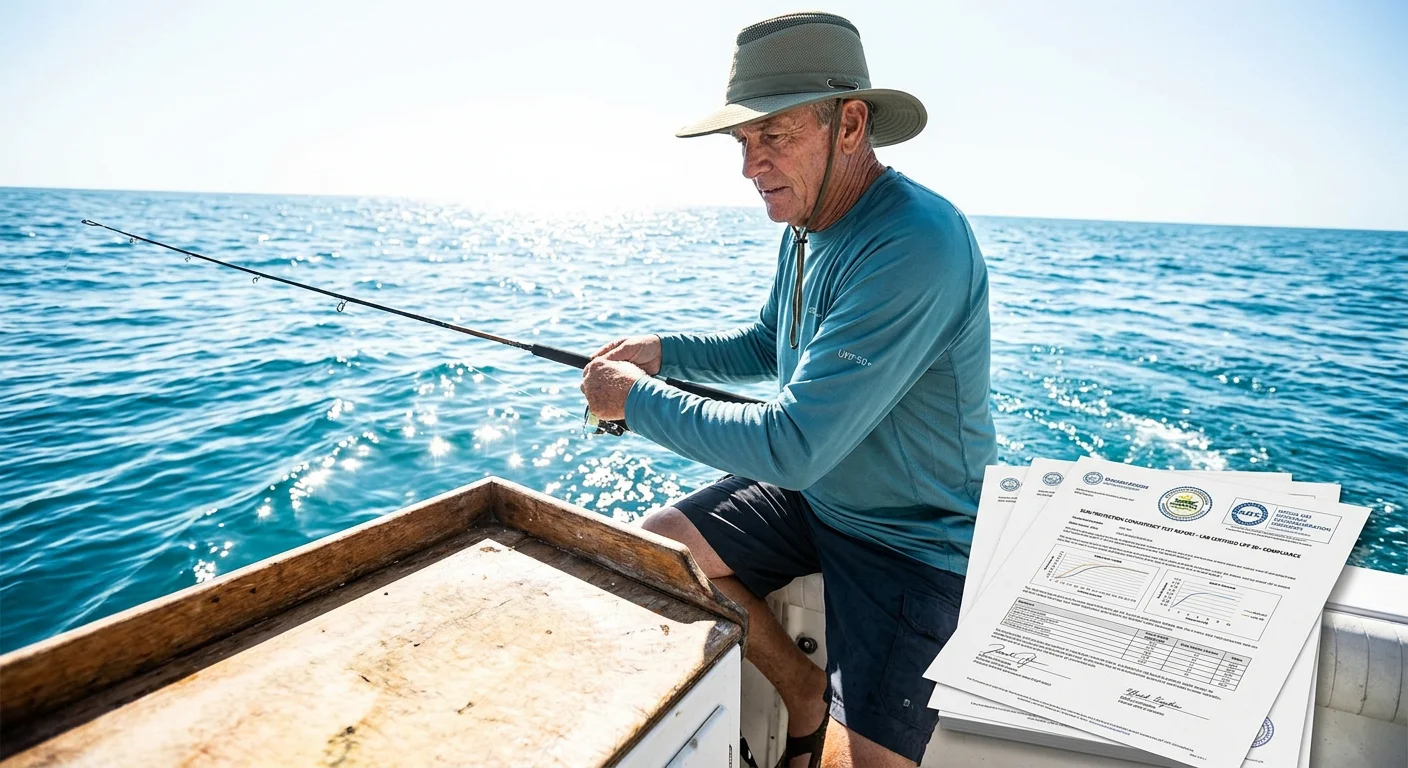
The water doesn't just sit there. It reflects. UV bounces off the surface and hits you from below. That adds 20–25% to your total exposure compared to standing on dry land. So sun protection on the water works differently — a one-size-fits-all approach breaks down fast.
Match your gear to the actual situation. How long are you out? What season is it? Are you casting from shore or riding swells twelve miles offshore? Those details drive every decision.
Shore Fishing & Light Boat Trips (4–6 Hours)
Start with a UPF 30–40 short-sleeve fishing jersey , a UPF 50+ wide-brim hat (3-inch brim minimum), and polarized UV-filter sunglasses. That combination covers 70–80% of your skin. Sunscreen handles the remaining 20–30%.
Pre-launch, 30 minutes out:
- Put on broad-spectrum SPF 30–50 — cover face, ears, neck, lips, and hands
- Use one teaspoon for face and neck combined. Use another teaspoon for both hands
On the water:
- One reapplication at the lunch mark covers the two-hour guideline for a 4–6 hour trip
- Stick or spray formulas work best on hands. Liquid sunscreen transfers to lures. Guides report it cuts down on bites
UPF clothing does the heavy lifting here. You cut total sunscreen volume by 60–70% compared to fishing in a regular short-sleeve shirt. Less product, less time, better results.
Offshore & Full-Day Trips (8+ Hours)
Full-day offshore fishing is a different category. You're dealing with a high UV index, water reflection from every angle, and no easy access to shade. UPF 50+ long-sleeve hooded shirts are not optional here.
A hooded fishing shirt paired with a UPF 50 neck gaiter covers 90% of upper-body skin. Add UPF-rated pants or leggings for your legs. Deck reflection burns legs faster than most anglers expect.
At the dock, before launch:
- Put SPF 50 water-resistant broad-spectrum sunscreen on your nose, cheekbones, lips, the skin around your sunglasses frames, backs of hands, and any gaps at gaiter edges
On the water:
- Reapply every 80–90 minutes . Dermatologists recommend this tighter interval for all-day water exposure — not the standard two-hour window
- An 8-hour day means 5–6 reapplications on exposed skin. With near-total UPF coverage, you're reapplying to face and hands only. That cuts time and product use significantly
- Use water-resistant formulas . Spray and sweat break down coverage faster offshore than in any other fishing context
Seasonal Adjustments
Summer (UV Index 8–10+)
Go with lightweight UPF 50+ jerseys in the 140–160 gsm range . Fast-drying, ventilated construction keeps the shirt comfortable through the heat. Color matters more than most anglers think — navy, charcoal, and red block more UV than light pastels. Pair with a neck gaiter and SPF 50+ on exposed skin. Reapply every two hours, or sooner if you're sweating hard. Take 15–20 minute shade breaks per hour when you can.
Spring & Fall (UV Index 4–7)
UPF 30–40 mid-weight shirts are enough as the UV index drops. Layer a UPF 30–40 base with a light UPF overshirt for extra coverage. Vented panels keep airflow moving. Use SPF 30 on face and hands, reapply every two hours. Slightly heavier fabric holds up well without losing comfort through shoulder-season temperature changes.
Full-Day vs. Half-Day: The Practical Summary
Scenario | Core UPF Gear | SPF Strategy | Reapplication |
|---|---|---|---|
Half-day shore/boat | UPF 30–50 jersey, wide-brim hat, sunglasses | SPF 30–50 on face, neck, hands | 0–1 reapplication within 5 hrs |
Full-day offshore | UPF 50+ hooded long-sleeve, gaiter, UPF pants | SPF 50 water-resistant on face and gaps | Every 80–90 min, face and hands only |
Summer peak UV | UPF 50+ lightweight, dark-color jersey + gaiter | SPF 50+ with shade breaks | Every 2 hrs minimum |
Spring/Fall | UPF 30–40 mid-weight, layered | SPF 30 on face and hands | Every 2 hrs |
Three numbers to keep in your kit:
UPF 30 minimum for any fishing day — UPF 50+ for summer and offshore
SPF 30 minimum on all exposed skin — SPF 50 near reflective water
Every 90 minutes for all-day trips; every 2 hours for shorter sessions
The shirt handles the surface. The sunscreen fills the gaps. Neither one does the full job alone.
Environmental & Wear Factors Impacting Real-World UV Blocking
That UPF 50+ rating on your fishing shirt? It was earned in a lab — dry fabric, no stretch, controlled conditions. Step into real life, and the number starts moving.
Wetness Changes Everything
A standard white cotton T-shirt tests at around UPF 7 when dry . Soak it through, and that drops to UPF 3 — protection cut by more than half. Cotton and loose-woven natural fibers turn semi-transparent wet. UV passes straight through, as if the fabric isn't there at all.
Synthetic quick-dry fabrics work differently. Tightly knit polyester and nylon hold their ground better in wet conditions. In some cases, fiber swelling closes microscopic gaps and makes up some of the loss. The bottom line: fast-drying synthetics restore full UPF protection faster than any cotton alternative. Out on the water, that difference adds up every single hour.
Fit and Stretch Aren't Minor Details
Stretching fabric pulls fibers apart. Wider gaps let more UV through. REI and multiple dermatology sources are clear on this: a garment stretched too tight can drop an entire UPF protection tier. A UPF 50+ shirt worn snug enough to show your shoulder shape may perform closer to UPF 30 on the water.
Go with relaxed or lightly tailored cuts . Fitted enough to move with you. Loose enough that the fabric stays unstretched through a full casting motion.
Color, Dye, and Long-Term Wear
Dark, saturated colors absorb UV rather than passing it through. Navy, charcoal, and deep red outperform pale pastels and white — worth keeping in mind when picking colorways for a sun protective fabric line.
Two wear factors quietly eat away at UPF over time:
Laundering strips surface-applied UV-absorbing finishes — especially in fabrics where the protective chemistry sits on top of the fiber rather than inside it
Abrasion at high-contact zones — shoulders, elbows, cuffs — thins the fabric over time, raising UV porosity right where rod friction and life vest straps hit hardest
Garments with ultraviolet protection factor performance built directly into the fiber structure hold up far better than those using topical coatings.
Coverage Is the Final Variable
Fabric UPF protects only the skin it covers. A short-sleeve shirt and shorts can leave over 50% of your body surface exposed. Add long sleeves, a wide-brim hat, a neck gaiter, and sun gloves — you can bring exposed skin below 10–15% of total surface area . That's the zone where SPF 30+ sunscreen steps in. Not as a backup. As a necessary partner.
Conclusion
The sun doesn't care if you're sourcing a 10,000-unit run of fishing shirts or casting a line at 6 a.m. UV radiation is constant. The gap between real protection and a false sense of security is bigger than most people think.
Here's what matters: UPF lives in your fabric. SPF lives on your skin. They measure different things. They follow different standards. Neither one replaces the other. For apparel buyers, that difference separates a solid product claim from a compliance problem. For anglers, it separates a comfortable day outdoors from a painful one.
Stop treating UV radiation protection as an either/or choice — whether you're checking out a UPF 50+ fishing apparel supplier or packing your tackle bag. Use both. Layer UPF fabric with SPF sunscreen. Check that your certifications are real. Pick gear that has been tested in the field, not just promoted in a catalog.
The best fishing days are long ones. Give your skin the full coverage it needs to last through every hour of them.